By Dan Gold · Sources reviewed
Ceiling Fan Direction
Set ceiling-fan direction for summer and winter, change it safely, and verify the airflow from below.
For most ceiling fans, summer means counterclockwise and winter means clockwise on low, viewed from below. Confirm the airflow and your model’s instructions rather than relying on the switch position.
Change direction safely
- Turn the fan off and let the blades stop completely. Use a stable stepladder if the housing switch needs reaching.
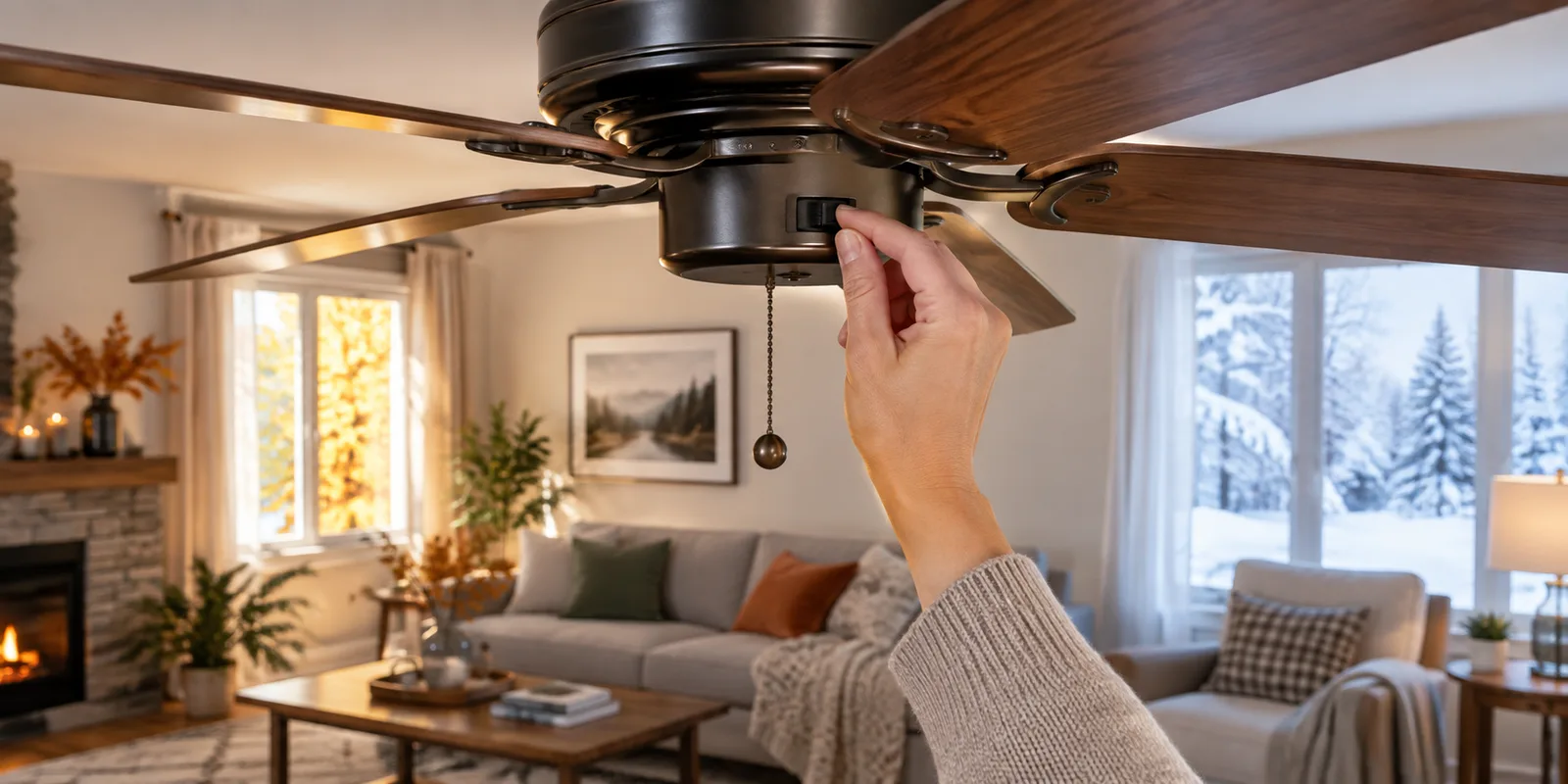
- Use the reverse switch, remote, or app described in the manual. Never move the switch while the blades are turning.
- Restart and observe from below. For summer, check for a downward breeze where you sit. For winter, use the lowest setting that circulates air without a noticeable draft.
Check the result
Stand under the fan, then sit where you normally use the room. Adjust speed for comfort. A fan cools people by air movement; it does not replace air conditioning or lower the room’s temperature. Turn it off in an empty room unless there is a specific circulation need.
If the direction will not change, the fan wobbles, or its blades cannot be reached safely, use the manufacturer’s support. For heating schedules, see programming a thermostat.
Sources and scope
These references support the guidance above. Source review is not a hands-on test of your home or a certification of a product. Follow the instructions for your exact model and local requirements.
Related reads and checklists
Programming Your Thermostat
Choose a heating and cooling schedule suited to your equipment, check actual operation, and adjust setbacks for household needs.
ChecklistHVAC Maintenance Checklist
Keep your heating and cooling systems running efficiently and extend their lifespan with this critical maintenance routine.
ChecklistFall and Winterizing Checklist
Prepare your home for the cold. A complete guide to sealing leaks, servicing heating systems, and preventing freeze damage.
BlogInsulating Drafty Outlets
Check outlet drafts and use compatible cover-plate gaskets only after safe isolation; leave wiring faults to an electrician.