By Dan Gold · Sources reviewed
Label Your Breaker Box
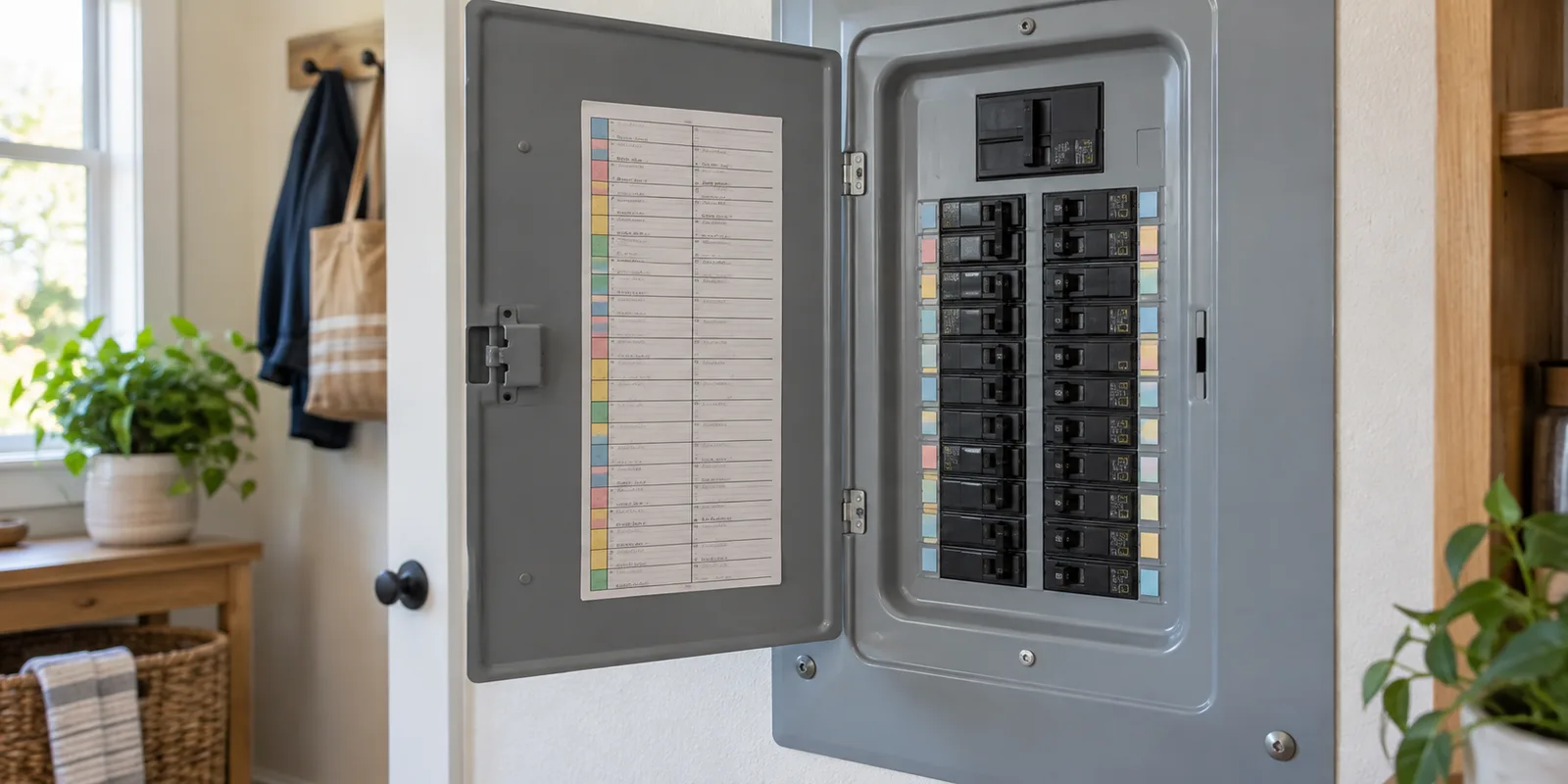
Map accessible branch circuits through normal breaker controls and record a clear directory without removing the panel cover.
Map circuits with a helper and record specific outlets and fixtures, not just a room name. A room can have several circuits, and one circuit can serve several rooms.
Map normal controls only
- Tell everyone before interrupting power. Protect computers and plan around medical equipment, alarms, refrigeration, and other essential loads.
- Inspect the panel from outside. Do not operate a wet, damaged, hot, buzzing, or scorched panel; call an electrician.
- Open only the hinged access door for normal breaker controls. Never remove the screwed-on panel cover.
- Have a helper use a lamp to check accessible outlets and note lighting that goes out while you switch one identified branch breaker off at a time.
- Restore that breaker before moving to the next. Label the circuit number and observed locations on the directory; mark uncertain entries for follow-up.
Check the result
Repeat a sample of the recorded checks and confirm essential equipment is back on. A lamp map does not prove safe isolation for wiring work or detect every shared circuit. Leave unknown or problematic circuits to an electrician.
Keep a dated copy of the directory in your home records and update it after electrical work.
Sources and scope
These references support the guidance above. Source review is not a hands-on test of your home or a certification of a product. Follow the instructions for your exact model and local requirements.
Related reads and checklists
Renovation Pre-Start Checklist
Before the hammer strikes. Logistics and protection steps to take before contractors walk through your door.
BlogTake "Before" Photos
Take photos of every room and valuable item for insurance purposes.
ChecklistElectrical Safety Checklist
Check cords, outlets, circuit protection, and normal panel controls, then record hazards that need an electrician.
BlogTest Smoke Detectors Properly
Test smoke alarms using the manufacturer’s button procedure, troubleshoot a failed test, and record when each alarm needs replacement.