By Dan Gold · Sources reviewed
Silencing a Running Toilet
How to check the chain and flapper before calling a plumber.
A running toilet may have a chain or seal problem, a fill valve that will not shut off, or an incorrect water level. Watch where the water goes before buying parts.
Diagnose with the lid off
- Let the tank finish filling. If water keeps flowing into the overflow tube, check the marked water level and float adjustment in the toilet or fill-valve instructions. Persistent overfilling can require fill-valve service.
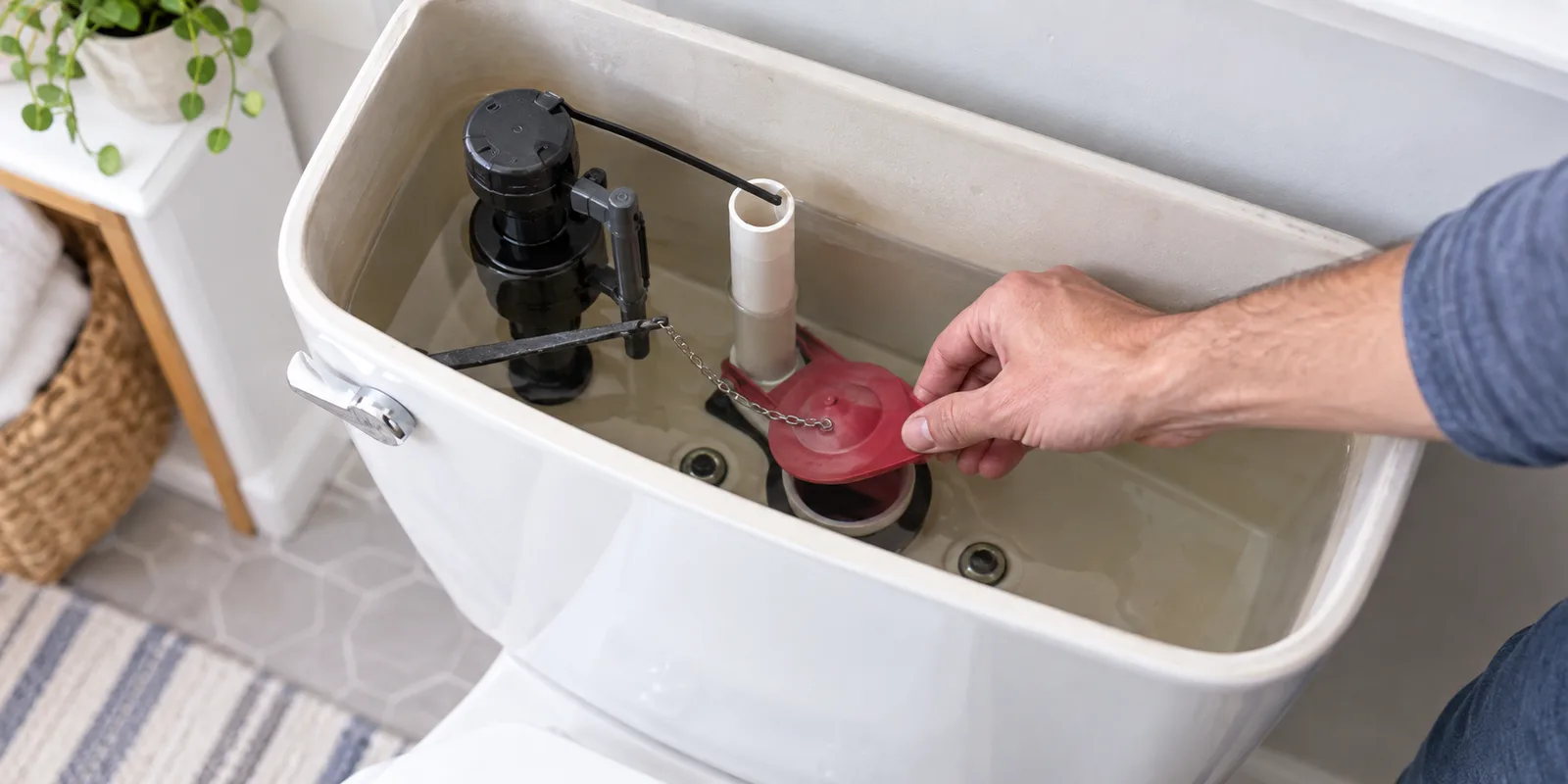
- If the water is below the overflow but the tank refills periodically, inspect the chain for tangling or excessive tension. Give it the slack specified for the model so the seal closes and still lifts during flushing.
- Run the ten-minute dye test to check for tank-to-bowl leakage.
- Identify whether the toilet uses a flapper, canister seal, or another flush valve. Match the replacement to its model; generic flappers do not fit every toilet.
Repair and verify
Close the toilet supply and confirm it stops before replacing an approved part. Never force a stuck shut-off. Follow the part’s instructions, restore water slowly, and inspect for external leaks.
Flush several times, check that filling stops at the correct level, and repeat the dye test. If it keeps running or the shut-off will not operate, call a plumber rather than repeatedly adjusting unrelated parts.
Sources and scope
These references support the guidance above. Source review is not a hands-on test of your home or a certification of a product. Follow the instructions for your exact model and local requirements.
Related reads and checklists
The Food Coloring Toilet Test
Use a ten-minute dye test to find a toilet tank leak, interpret the result, and retest after the correct repair.
ChecklistWhole Home Plumbing Audit
Catch leaks before they become floods. A systematic check of taps, traps, and tanks to ensure water stays in the pipes.
BlogCheck Your Water Shut-Off
Locate your main water valve, check which systems depend on it, and verify a safe shutoff test without forcing a stuck valve.
ChecklistBathroom Remodel Planning
Plan the perfect sanctuary. A roadmap to navigating layouts, materials, and plumbing for a successful renovation.