Electrical Safety Checklist
Check cords, outlets, circuit protection, and normal panel controls, then record hazards that need an electrician.
By Dan Gold · Sources reviewed
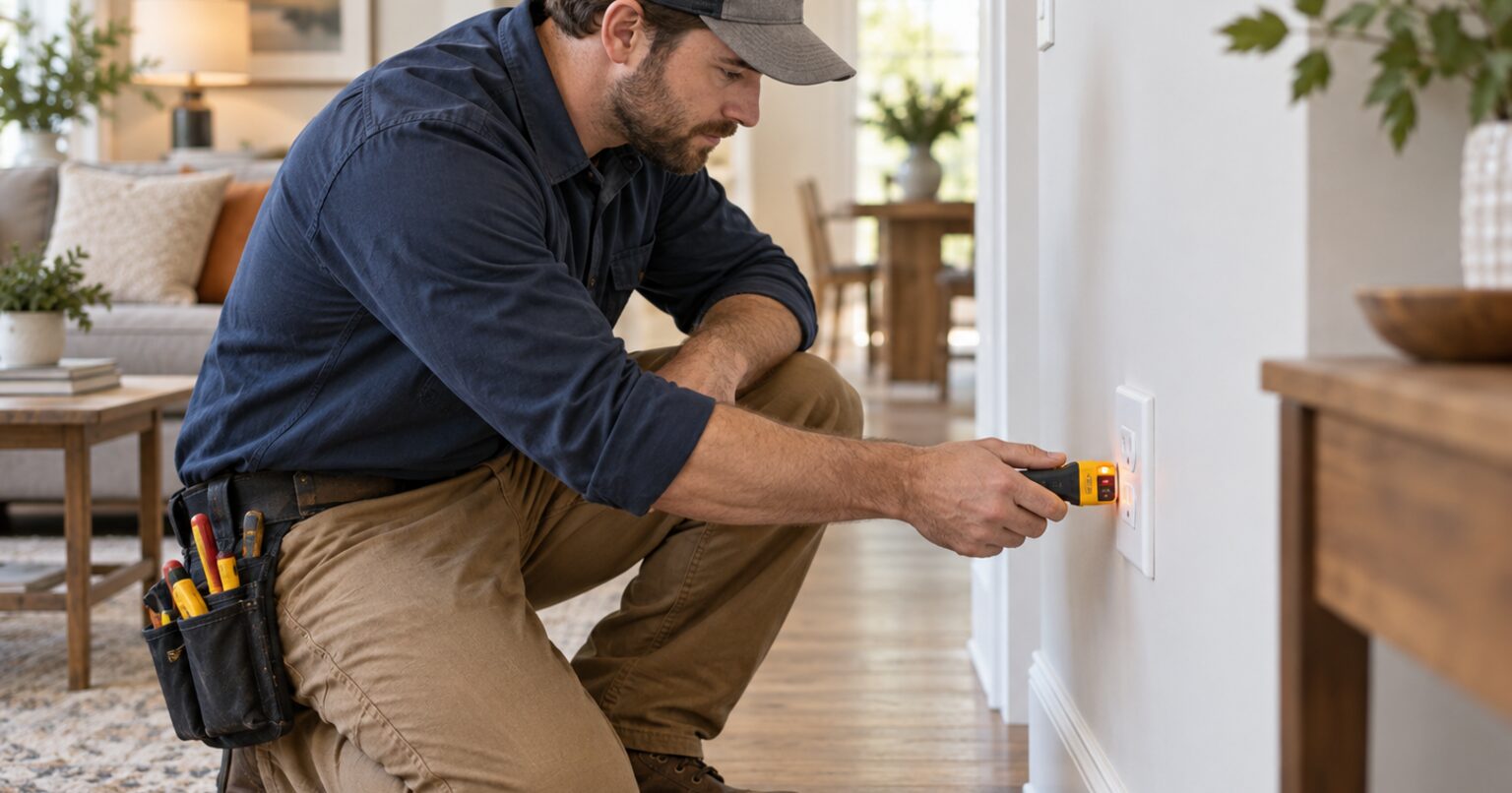
This is a visual and normal-control safety check, not a wiring inspection. Keep panel covers in place. Never touch equipment to find out whether it is energized; a non-contact tester alone cannot certify safe isolation.
Work through the checklist
- GFCIs: With the circuit powered, plug in a lamp, press TEST and confirm it goes out, then RESET and confirm power returns. A downstream outlet may be protected without having its own buttons.
- AFCIs: Warn the household before testing. Use each equipped breaker’s TEST procedure and reset instructions; document any failure for an electrician.
- Cords: Look for cracking, fraying, exposed conductors, or loose plugs. Stop using damaged cords rather than taping them.
- Bulbs: Check actual wattage, socket, enclosed-fixture and dimmer ratings against the fixture label. LEDs still produce heat.
- Outlets and switches: Look for scorching, buzzing, odor or unusual heat reported during normal use. Do not touch suspected live or damaged equipment.
- Loose connections: Stop using outlets whose plugs will not stay seated and arrange replacement by a qualified electrician.
- Routing: Move cords out from under rugs and away from pinch points, doorways and furniture legs.
- Directory: Verify and label identified branch circuits through normal controls; never remove the screwed-on panel cover.
- Extension leads: Use only temporarily and within their ratings. Do not daisy-chain strips; high-power loads need their specified supply.
- Outdoor protection: Check appropriate weather covers from a dry, safe position. Have damage or missing required protection assessed.
Progress is saved in this browser. Revised tasks start a new checklist.
Check the result and follow up
A completed list should include the tested location and date plus a separate repair list. Treat failed protection, smoke, arcing, shocks, or burning smells as unresolved hazards. Leave unsafe equipment out of service and contact an electrician; use emergency services for an active fire. Repeat manufacturer-required checks at their specified interval.
Sources and scope
These references support the guidance above. Source review is not a hands-on test of your home or a certification of a product. Follow the instructions for your exact model and local requirements.
Did this help?
Get more simple guides like this in your inbox.
Related reads and checklists
Home Safety Audit
Review alarm coverage, escape routes, electrical hazards, furniture anchors, and dryer exhaust with a clear follow-up record.
BlogTest Smoke Detectors Properly
Test smoke alarms using the manufacturer’s button procedure, troubleshoot a failed test, and record when each alarm needs replacement.
BlogCheck Fire Extinguisher Date
Check extinguisher condition, the model’s inspection and service requirements, and when replacement or professional service is needed.
ChecklistNew Home Walkthrough (Final Walkthrough)
The last step before closing on an existing home. Verify repairs and ensure the property is in the agreed condition.