Hurricane & Severe Weather Prep
When the power goes out, be ready. A survival kit checklist and property prep guide for severe storms.
By Dan Gold · Sources reviewed
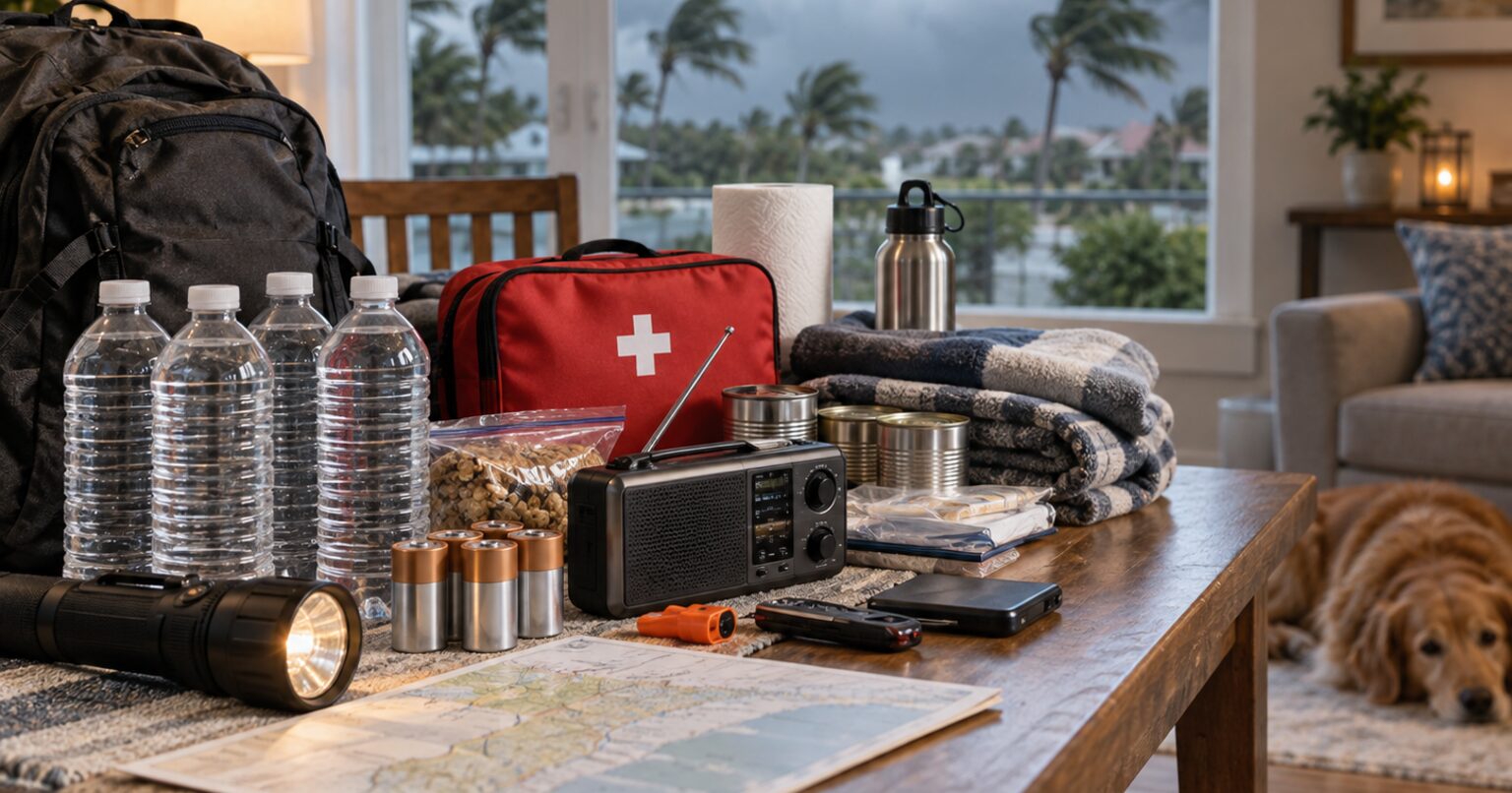
Build both a home supply and a portable evacuation bag ahead of the season. Follow local evacuation instructions early; a full pantry is not a reason to stay in an unsafe flood or storm-surge area.
Work through the checklist
- Water: Store at least one gallon per person per day for several days. Consider a two-week supply where practical and extra needs for heat, pets and medical care.
- Food: Pack shelf-stable foods the household can eat without power, including dietary needs; rotate supplies.
- Opening and utensils: Add a manual can opener, eating utensils and a way to manage waste.
- Light: Check LED flashlights/lanterns and spare batteries. Avoid candles.
- Alerts: Test a battery/hand-crank radio and sign up for local emergency alerts. Save evacuation routes offline.
- Health: Include first-aid supplies and arrange an appropriate prescription reserve with the pharmacist; check expiry and refrigeration needs.
- Power: Charge phones and banks, check their real capacity, and pack cables. Plan for essential medical-device power separately.
- Documents: Keep copies of ID, insurance and emergency contacts in a portable waterproof container; protect originals and digital backups.
- Cash and essentials: Add modest cash, hygiene items, clothing, pet supplies and accessibility needs.
- Property: Secure outdoor items before conditions become unsafe. Use approved shutters or coverings; do not tape windows as impact protection.
- Generator: Use only outdoors, at least twenty feet from doors, windows and vents, with exhaust away from the home. Never use a garage or backfeed an outlet.
- Departure: Decide transport, destinations and pet arrangements now. Follow official instructions rather than waiting for a fixed warning countdown.
Progress is saved in this browser. Revised tasks start a new checklist.
Check the result and follow up
Rehearse finding and loading the bag, verify alert reception, and label expiry/review dates. A dishwasher or washing machine is not flood-safe document storage or an emergency cooler. Elevate protected records where appropriate without delaying evacuation. Check food temperatures after an outage and use official discard guidance rather than a visual guess.
Sources and scope
These references support the guidance above. Source review is not a hands-on test of your home or a certification of a product. Follow the instructions for your exact model and local requirements.
Did this help?
Get more simple guides like this in your inbox.