By Dan Gold · Sources reviewed
Clean Your Washing Machine Seal
Remove residue from a front-loader’s gasket with approved cleaning methods, avoid incompatible cleaners, and check for persistent odor or leaks.
Clean residue from a front-loader’s door gasket using the washer’s care instructions. Do not apply vinegar and then bleach: mixing bleach with acids can release toxic chlorine gas.
Before you start
Empty the washer and identify its model. Gather gloves, a soft cloth, and the cleaner its manual approves. Keep children and pets away. Odor can also come from the dispenser, drum, or drain filter; the seal is only one possible source.
Clean the folds
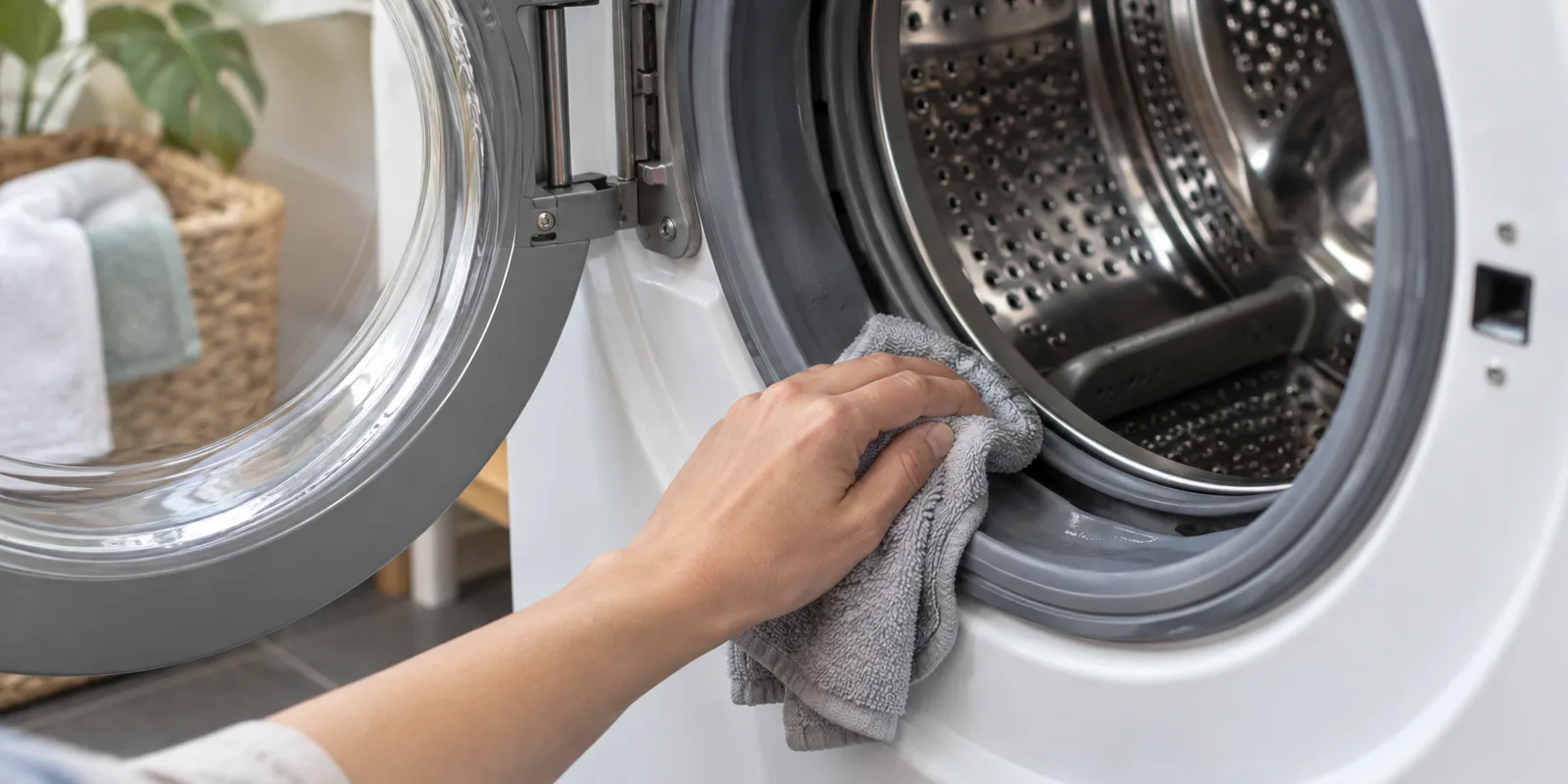
- With the washer idle, gently pull back the gasket folds. Remove loose lint, hair, and small objects without damaging the rubber.
- Wipe with a damp cloth or the approved cleaning product. Avoid abrasive brushes and do not improvise a bleach concentration.
- If the manual permits diluted bleach, follow both the washer and bleach labels for dilution, contact time, ventilation, and rinsing. Use one cleaning method only; never combine cleaners.
- Wipe dry. Run the washer’s designated cleaning cycle with its approved cleaner if the manual calls for it.
- Allow the interior to dry only where an open door is safe from children and pets. Otherwise follow the manufacturer’s safe drying guidance.
Check the result
Inspect for remaining debris, then check odor after the next empty cleaning cycle and wash. A torn seal, persistent growth, or leakage needs service. Cleaning cannot repair damaged rubber. Review the appliance cleaning checklist for the other odor sources.
Sources and scope
These references support the guidance above. Source review is not a hands-on test of your home or a certification of a product. Follow the instructions for your exact model and local requirements.
Related reads and checklists
Appliance Deep Clean Checklist
Extend the life of your major appliances and improve safety with this deep cleaning routine.
BlogClean Your Dryer Vent Hose
Clean accessible dryer ducting, check the full exhaust route and outdoor damper, and know when a vent-cleaning professional is needed.
ChecklistRoof & Attic Inspection
The top-down checkup. Spotting leaks, ventilation issues, and insulation gaps to protect your home's envelope.
BlogClean Your Range Hood Filter
Clean reusable hood filters with approved detergent methods, replace charcoal filters as directed, and check airflow afterward.