By Dan Gold · Sources reviewed
Find a Stud Without a Finder
Use a magnet to locate drywall fasteners, understand what it cannot prove, and verify framing before mounting.
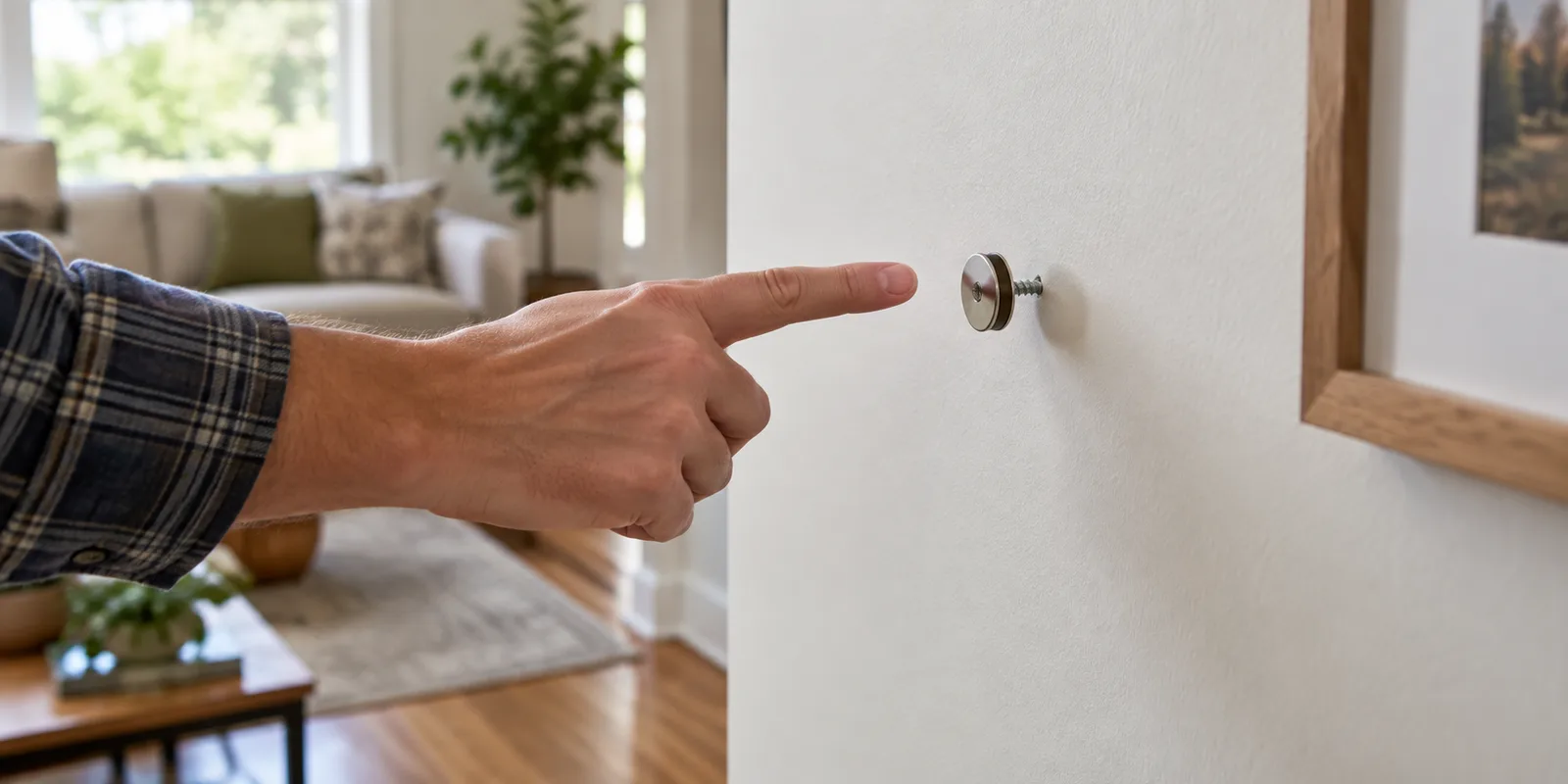
A magnet locates metal fasteners in drywall, which can help trace a stud. It does not prove the stud’s center, material, load capacity, or the absence of wires and pipes.
Locate a likely framing line
- Use a purpose-made magnetic finder or a safely handled magnet. Keep small strong magnets away from children, pets, and equipment affected by magnets.
- Sweep slowly across the wall and mark each attraction point lightly with painter’s tape.
- Find additional fasteners above and below. Several aligned points provide stronger evidence than a single metal hit.
- Verify the mounting location using the fixture maker’s stud-finding and fastening instructions. Metal framing, corner beads, pipes, and other metal can produce hits.
Check before drilling
The magnet method is a locating aid, not a drilling safety clearance. Check for concealed services and use appropriate detection and mounting instructions. Do not assume an outlet tells you every wire route or that a fixed spacing guarantees a stud.
For heavy shelves, TVs, or safety anchors, verify the framing and required fasteners before loading. If the wall construction or utilities remain uncertain, use a qualified installer.
Sources and scope
These references support the guidance above. Source review is not a hands-on test of your home or a certification of a product. Follow the instructions for your exact model and local requirements.
Related reads and checklists
Patching Small Nail Holes
A renter-friendly guide to using spackle for a seamless look.
BlogFix a Squeaky Door Hinge
Locate a door squeak, apply an approved hinge lubricant, and check for loose hardware or frame rubbing if it returns.
ChecklistTool Box Essentials
The 20% of tools that do 80% of the work. Build a capable kit to handle basic home repairs.
ChecklistGarage Organization & Cleanout
Reclaim your parking space. A tactical plan to sort, store, and zone your garage for maximum utility.