By Dan Gold · Sources reviewed
Vacuum Refrigerator Coils
Check whether your refrigerator’s coils are user-accessible, clean them as instructed, and verify normal operation afterward.
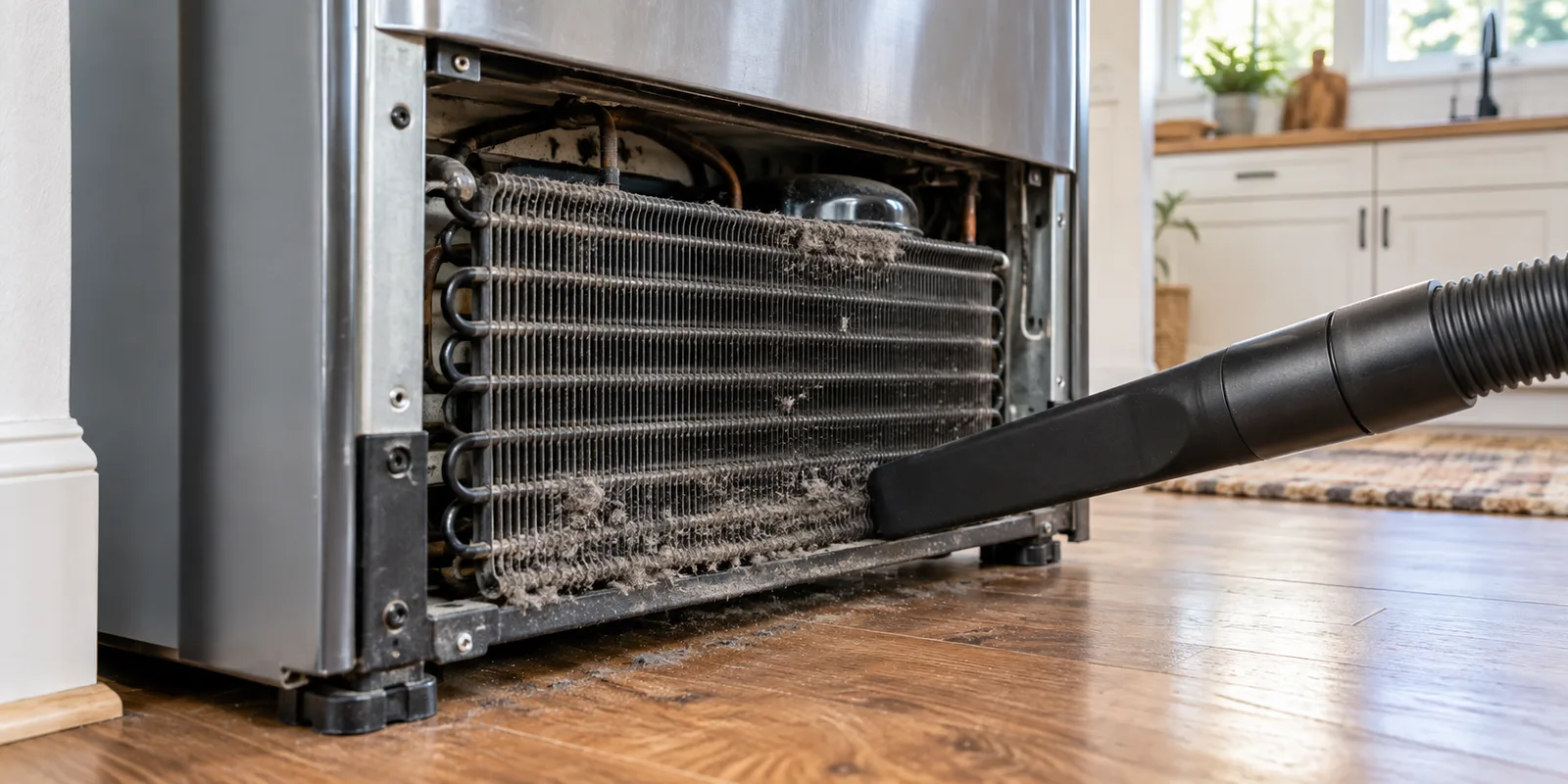
Clean refrigerator condenser coils only if the model manual calls for owner cleaning. Some coils are inaccessible or do not need routine cleaning; poor cooling is not automatically a dust problem.
Clean approved accessible coils
- Read the model’s coil location and cleaning instructions. Keep the doors closed while working and plan to reconnect power promptly.
- Unplug the refrigerator or isolate its circuit. If it must move, protect the floor and avoid straining a water line or power cord.
- Remove only the grille or cover the manual identifies for owner access. Do not open electrical or sealed-system panels.
- Use a soft brush and vacuum attachment to remove dust gently. Avoid bending fins, tubing, or nearby fan parts.
- Refit the grille, position the fridge without crushing its connections, and restore power.
Check the result
Verify normal operation and use a refrigerator thermometer to monitor temperature after it stabilizes. Continued poor cooling, a damaged tube, unusual noise, or water leakage needs service. Do not promise extra years of life from one cleaning.
Use the manual’s interval, adjusted for pets and dusty conditions where applicable. Add the task to the appliance cleaning checklist.
Sources and scope
These references support the guidance above. Source review is not a hands-on test of your home or a certification of a product. Follow the instructions for your exact model and local requirements.
Related reads and checklists
Appliance Deep Clean Checklist
Extend the life of your major appliances and improve safety with this deep cleaning routine.
BlogClean Your Range Hood Filter
Clean reusable hood filters with approved detergent methods, replace charcoal filters as directed, and check airflow afterward.
ChecklistHVAC Maintenance Checklist
Keep your heating and cooling systems running efficiently and extend their lifespan with this critical maintenance routine.
BlogClean Your Dryer Vent Hose
Clean accessible dryer ducting, check the full exhaust route and outdoor damper, and know when a vent-cleaning professional is needed.