By Dan Gold · Sources reviewed
Identifying "Vampire" Electronics
Which devices use power when off and when to use a smart plug.
Standby power varies widely by device and settings. Measure it before deciding which electronics deserve a switched strip. An idle phone charger is not automatically the biggest source of waste.
Find avoidable standby use
- List entertainment and office devices that stay powered while unused. Check their sleep, instant-on, update, and network settings.
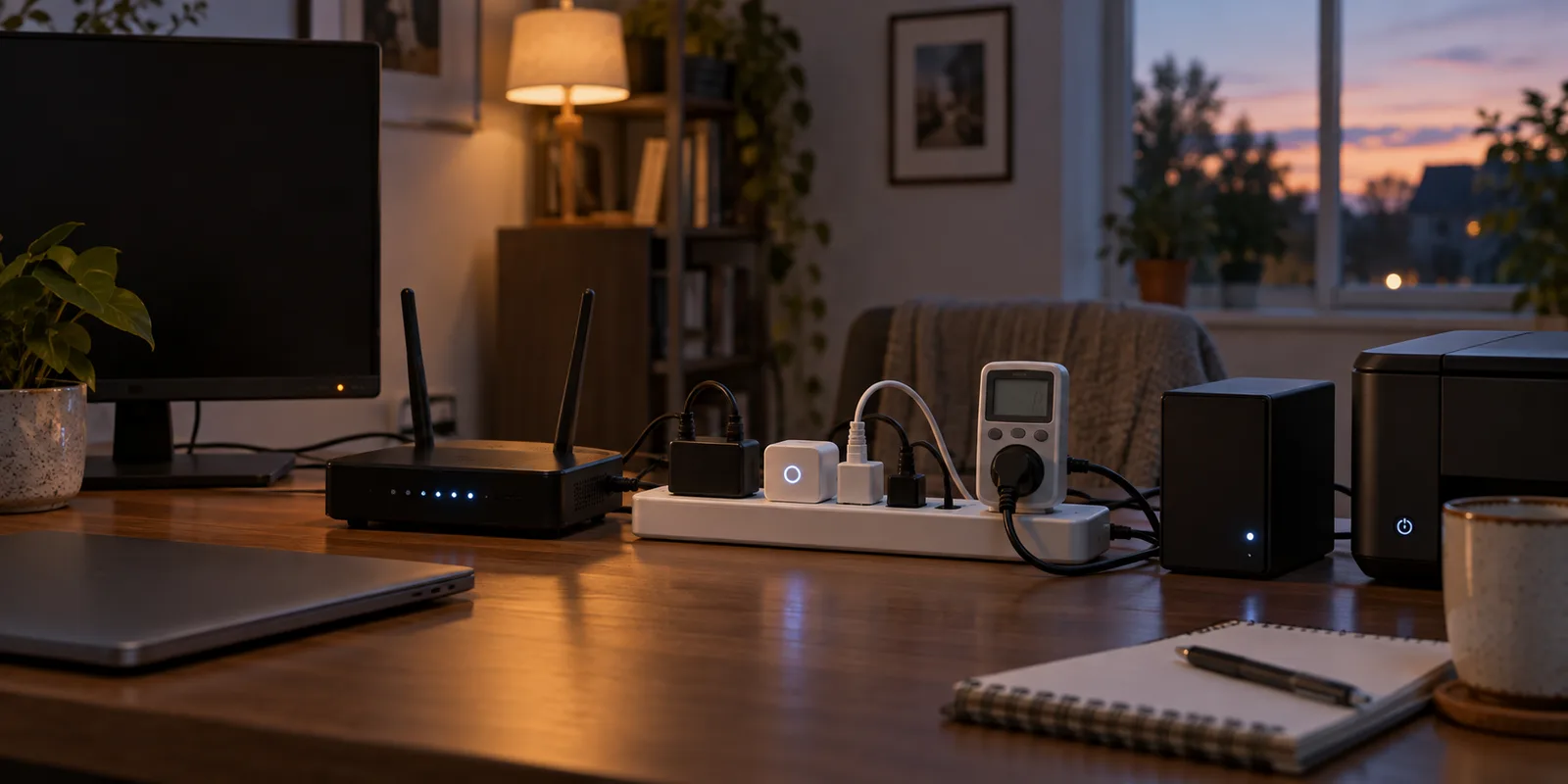
- If you have an appropriately rated plug-in energy meter, measure watts in standby and typical use. Follow its rating and instructions; do not attach it to incompatible loads.
- Estimate annual use: standby watts × unused hours per day × 365 ÷ 1,000 = kWh per year. Multiply by your actual per-kWh rate for an estimate.
- Enable energy-saving modes first. For suitable electronics, use a rated switched or advanced power strip, following both strip and device instructions.
Check the result
Re-measure after changing settings. Confirm that devices still start normally and that required updates or recordings are not disrupted. A smart plug consumes some energy itself, so count that when comparing options.
Keep refrigerators, medical equipment, alarms, sump pumps, routers needed for monitoring, and other essential loads powered. Do not use a strip or smart plug for high-power equipment unless specifically rated and approved for it. Try the energy cost calculator with measured values.
Sources and scope
These references support the guidance above. Source review is not a hands-on test of your home or a certification of a product. Follow the instructions for your exact model and local requirements.
Related reads and checklists
Insulating Drafty Outlets
Check outlet drafts and use compatible cover-plate gaskets only after safe isolation; leave wiring faults to an electrician.
BlogCeiling Fan Direction
Set ceiling-fan direction for summer and winter, change it safely, and verify the airflow from below.
ChecklistHVAC Maintenance Checklist
Keep your heating and cooling systems running efficiently and extend their lifespan with this critical maintenance routine.
ChecklistElectrical Safety Checklist
Check cords, outlets, circuit protection, and normal panel controls, then record hazards that need an electrician.