By Dan Gold · Sources reviewed
Carpet Dents and the Ice-Cube Trick: What to Check First
Assess carpet dents, try gentle pile recovery, and check care instructions before using the popular ice-cube trick.
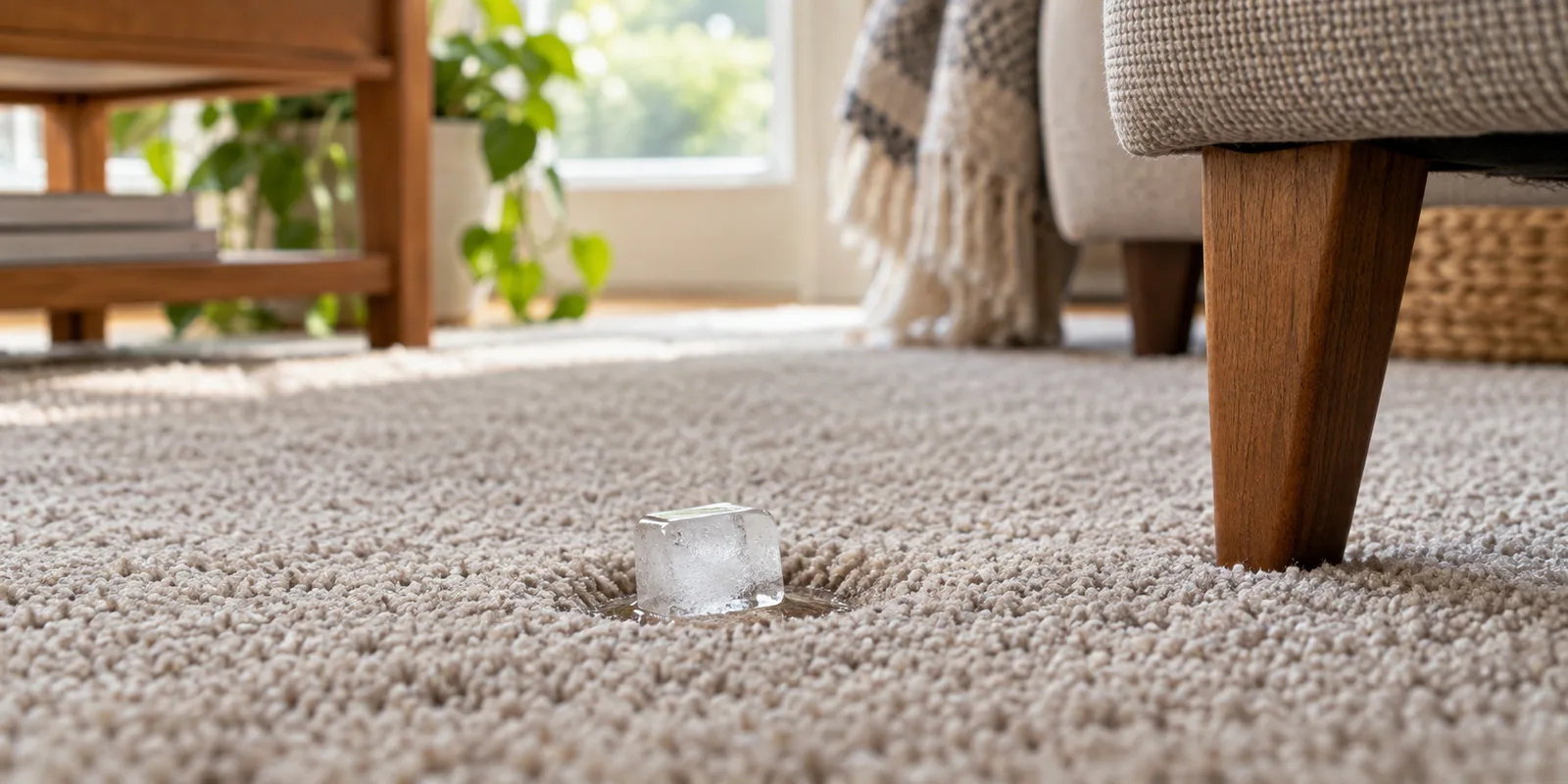
Furniture dents are compressed carpet pile. An ice cube is a popular experiment, but it is not a guaranteed ten-minute repair or suitable for every fiber, backing, rug, or floor beneath it.
Start with the care guide
Identify the carpet and check the manufacturer’s advice. For an unknown rug, wool or natural fibers, sensitive dyes, or wood beneath a loose rug, ask the maker or a carpet professional before adding moisture.
Try the lower-risk steps first
- Remove the furniture load and allow the pile time to recover.
- Vacuum with the setting suitable for that carpet. Gently lift compressed pile without tearing or scraping fibers.
- If the maker explicitly permits damp treatment, test an inconspicuous area first. Use its controlled-moisture method rather than soaking the backing with several ice cubes.
- Blot excess moisture with a white towel and allow complete drying before replacing furniture.
Check the result
Compare the pile only after it dries. Stop if there is color transfer, a water mark, distortion, or persistent dampness. Permanent crushing may need professional treatment; adding heat or water repeatedly can make things worse.
Use suitable furniture protectors and periodically adjust heavy items to reduce future compression.
Sources and scope
These references support the guidance above. Source review is not a hands-on test of your home or a certification of a product. Follow the instructions for your exact model and local requirements.
Related reads and checklists
Removing Scratches from Wood
Distinguish superficial finish marks from deeper wood damage and choose a compatible repair rather than relying on the walnut trick.
BlogRevive Velcro
Use a fine-tooth comb to pull lint out of velcro strips so they stick again.
ChecklistNew Build Blue Tape Walkthrough
The final inspection before you close. How to spot cosmetic and functional defects in your new construction home.
ChecklistTool Box Essentials
The 20% of tools that do 80% of the work. Build a capable kit to handle basic home repairs.