By Dan Gold · Sources reviewed
Removing Scratches from Wood
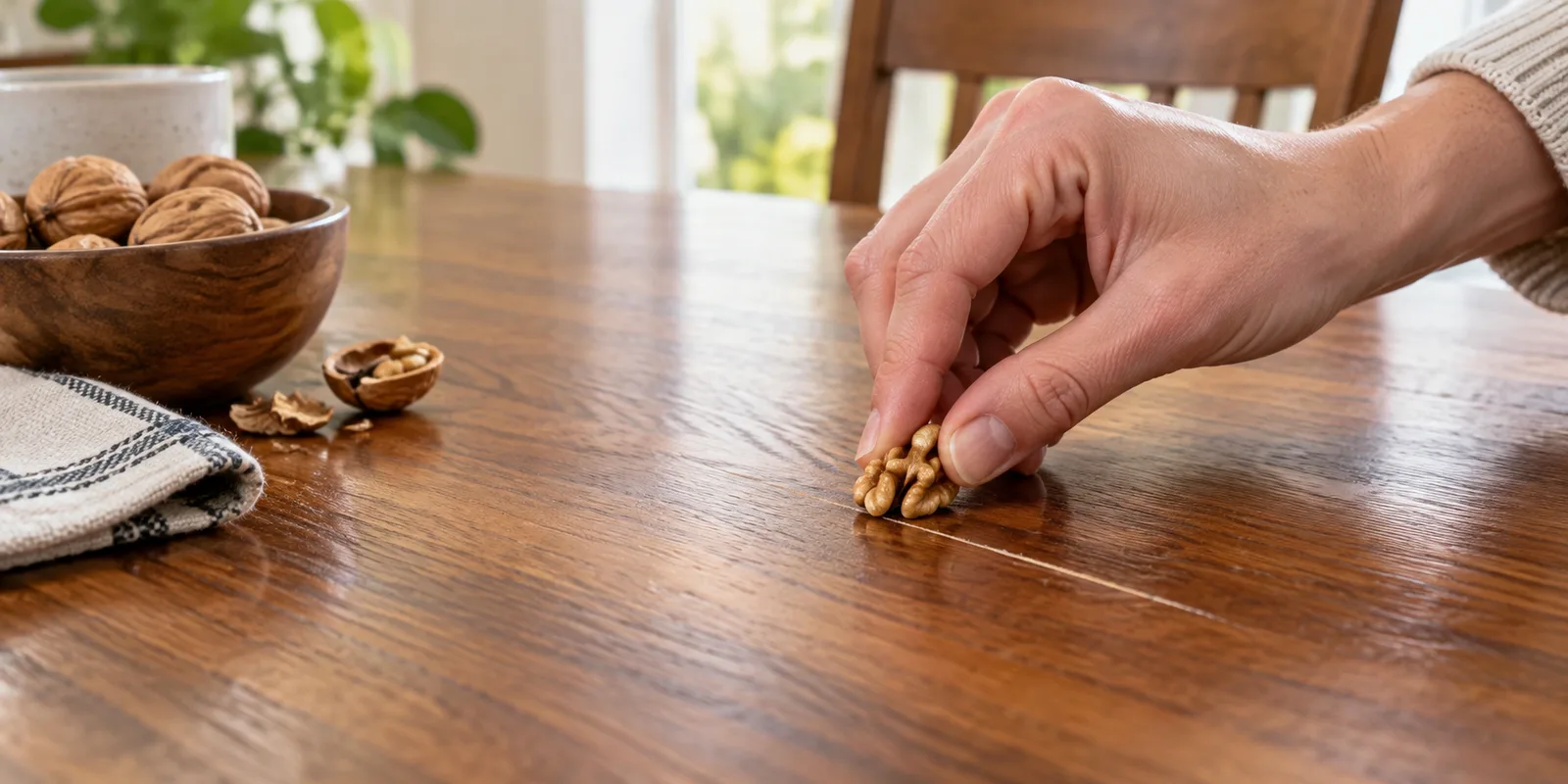
Distinguish superficial finish marks from deeper wood damage and choose a compatible repair rather than relying on the walnut trick.
A touch-up marker can disguise some small scratches in compatible stained wood. It does not fill a deep gouge or restore a worn clear finish. Walnut rubbing is not a dependable repair for every finish.
Choose the right repair
- Identify whether the surface is solid wood, veneer, laminate, painted, or coated. Check the furniture’s care instructions. Ask a conservator before treating a valuable antique.
- Clean gently with the approved method and dry. Inspect whether the mark is dirt, a finish scuff, or exposed wood.
- For a small scratch in suitable stained wood, select a wood touch-up product close to the color. Test a hidden spot first and let it dry.
- Apply sparingly to the scratch as the product directs, removing excess before it colors intact finish.
- Allow the full drying time and apply any recommended compatible protective finish.
Check the result
View it in daylight from several angles. If the mark remains lighter but the finish is sound, a second approved application may help. Stop if the surrounding finish changes or color spreads.
Deep damage needs suitable filler or professional refinishing. Do not sand through thin veneer or apply oily food to an unknown coating.
Sources and scope
These references support the guidance above. Source review is not a hands-on test of your home or a certification of a product. Follow the instructions for your exact model and local requirements.
Related reads and checklists
Carpet Dents and the Ice-Cube Trick: What to Check First
Assess carpet dents, try gentle pile recovery, and check care instructions before using the popular ice-cube trick.
BlogRevive Velcro
Use a fine-tooth comb to pull lint out of velcro strips so they stick again.
ChecklistNew Build Blue Tape Walkthrough
The final inspection before you close. How to spot cosmetic and functional defects in your new construction home.
ChecklistTool Box Essentials
The 20% of tools that do 80% of the work. Build a capable kit to handle basic home repairs.