By Dan Gold · Sources reviewed
Remove Crayons from Walls
Remove crayon from painted walls with gentle cleaning, and learn when heat may help without damaging the finish.
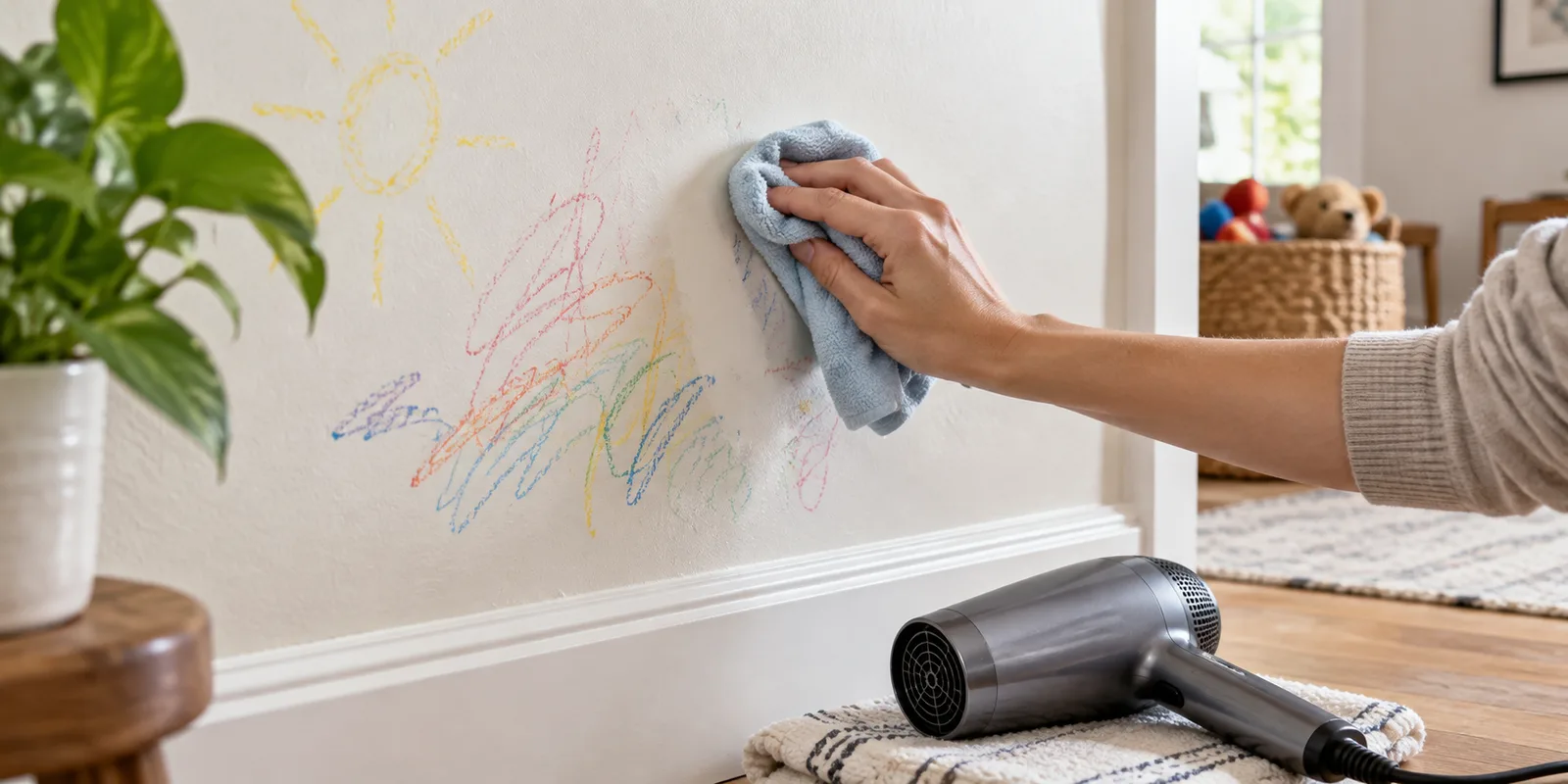
Crayon on a painted wall? Start with a soft cloth and mild soap. A little warmth can help with waxy marks that remain, but the paint finish matters more than getting every trace off in one pass.
Start with soap and water
- Test first: Try a lightly damp cloth in a hidden spot. Let it dry and check for a change in color or sheen.
- Wipe gently: Add a few drops of mild dish soap to warm water. Wring out a soft cloth or sponge and wipe the crayon mark with light pressure. Avoid scrubbing, especially on flat or matte paint.
- Rinse and dry: Wipe away the soap with a second, barely damp cloth, then pat the area dry. Repeat gently if the mark is fading and the finish still looks the same.
If wax remains, try gentle heat
Use a hair dryer on a low, warm setting to soften the wax, moving it over the mark rather than holding it in one place. Blot the softened crayon with a clean soft cloth or paper towel, then wipe away any residue with the mild soap solution above. Stop if the paint softens or the finish changes. Heat may lift wax, but it may not remove every pigment stain.
Why I skip the Magic Eraser
A Magic Eraser can remove crayon, but its abrasive action can also take the sheen off painted walls or leave a patch that looks different in the light. That is why I prefer a soft cloth and mild soap. The Magic Eraser maker warns against using it on satin and high-gloss surfaces, and Sherwin-Williams cautions that abrasive scrubbing can dull painted finishes. If the mark or a changed patch remains, a paint touch-up may be the better fix.
The soap-and-water approach follows Crayola’s guidance for regular crayon on painted walls. The optional hair-dryer method is also described in a paint-care guide; neither method is guaranteed to work on every paint and crayon combination.
Sources and scope
These references support the guidance above. Source review is not a hands-on test of your home or a certification of a product. Follow the instructions for your exact model and local requirements.
Related reads and checklists
Create a "Paint Key"
Keep a spreadsheet of the brand, sheen, and color code for every room in your house.
BlogFind a Stud Without a Finder
Use a magnet to locate drywall fasteners, understand what it cannot prove, and verify framing before mounting.
BlogPatching Small Nail Holes
A renter-friendly guide to using spackle for a seamless look.
BlogCarpet Dents and the Ice-Cube Trick: What to Check First
Assess carpet dents, try gentle pile recovery, and check care instructions before using the popular ice-cube trick.