By Dan Gold · Sources reviewed
Remove Rust from Tools
Remove surface rust with a compatible treatment, protect handles and coatings, and retire tools whose damage affects safe use.
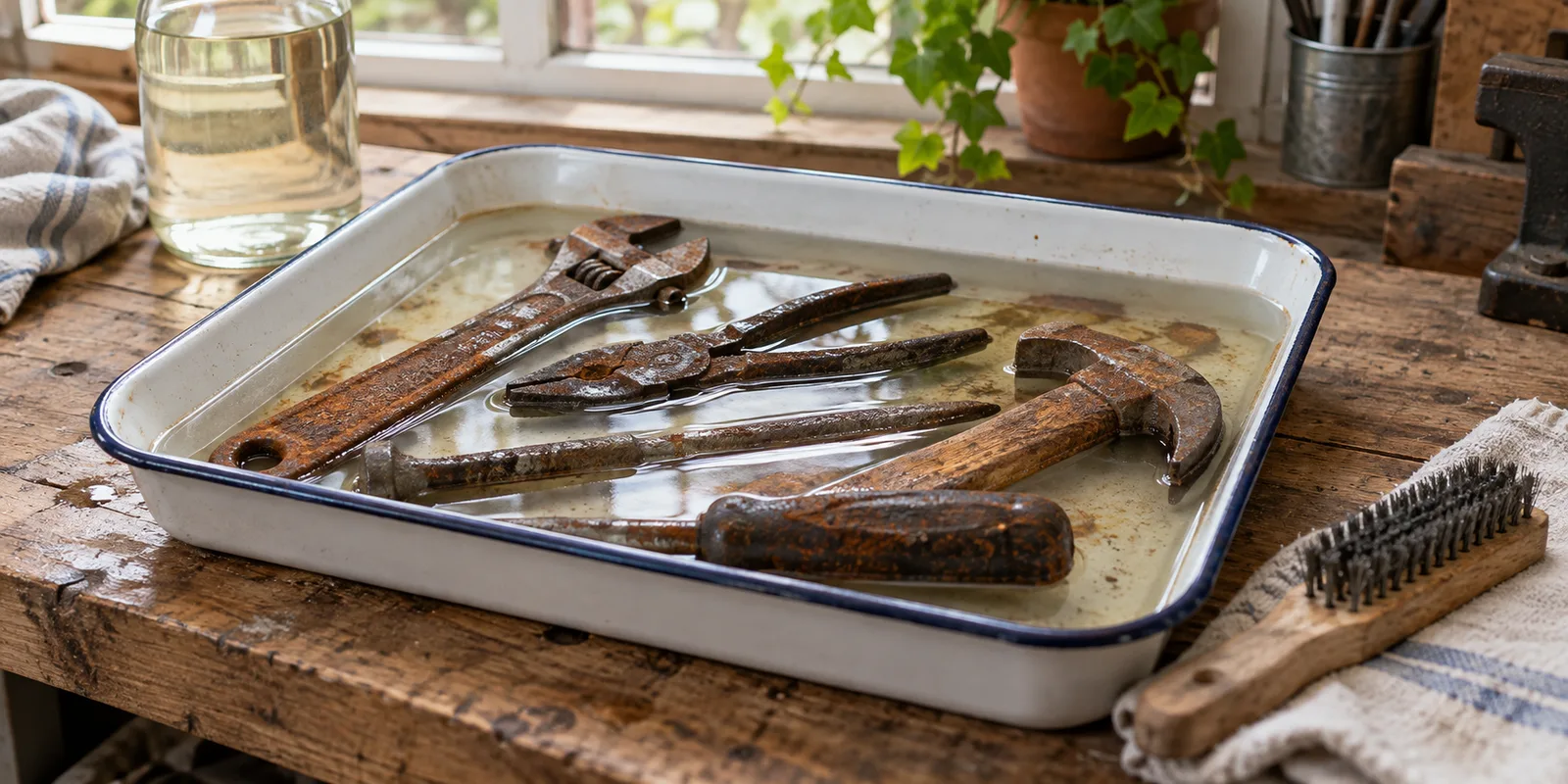
Remove surface rust only after checking the tool’s material and condition. A long vinegar bath can damage finishes or other components; use a rust remover approved for the metal and follow its label instead of a universal overnight recipe.
Restore a suitable hand tool
- Inspect for cracks, deep pitting, damaged cutting edges, and weak handles. Cleaning does not restore lost strength; replace an unsafe tool.
- Remove dirt and grease as the tool and cleaner instructions permit. Keep powered tools, batteries, electronics, wooden handles, and incompatible finishes out of an immersion bath.
- Apply an approved rust remover with the stated protection, contact time, and temperature. Check progress rather than leaving mixed-material tools soaking unattended.
- Rinse or wipe as that product requires. Dry completely, including pivots.
- Apply the tool maker’s protective oil or coating to appropriate metal surfaces. Keep lubricants off grips and cutting work where they would be unsafe.
Check the result
Confirm pivots move normally and inspect exposed pitting before using the tool. Dispose of used cleaner under its instructions and local rules; do not mix it with other chemicals. Store the restored tool dry.
Sources and scope
These references support the guidance above. Source review is not a hands-on test of your home or a certification of a product. Follow the instructions for your exact model and local requirements.
Related reads and checklists
Find a Stud Without a Finder
Use a magnet to locate drywall fasteners, understand what it cannot prove, and verify framing before mounting.
BlogFix a Squeaky Door Hinge
Locate a door squeak, apply an approved hinge lubricant, and check for loose hardware or frame rubbing if it returns.
ChecklistTool Box Essentials
The 20% of tools that do 80% of the work. Build a capable kit to handle basic home repairs.
ChecklistGarage Organization & Cleanout
Reclaim your parking space. A tactical plan to sort, store, and zone your garage for maximum utility.