By Dan Gold · Sources reviewed
How to Unclog a Sink Without Chemicals
Clear a slow sink by cleaning the stopper, plunging, and checking a serviceable trap, with clear limits for calling a plumber.
For a slow sink, start by removing debris from the stopper, then try a sink plunger. A fizzing baking-soda-and-vinegar mixture is not a dependable way to remove a physical blockage.
Before you start
Get gloves, a flat-cup sink plunger, a bucket, towels, and the stopper’s removal instructions. If chemical drain cleaner has already been used, do not plunge or open the trap: tell a plumber what was added. Do not pour boiling water into an unknown sink or pipe system.
Clear the blockage
- Remove the stopper as designed. Lift out accessible hair and residue with a suitable tool; never reach into a garbage disposal. Disconnect disposal power before any work around it.
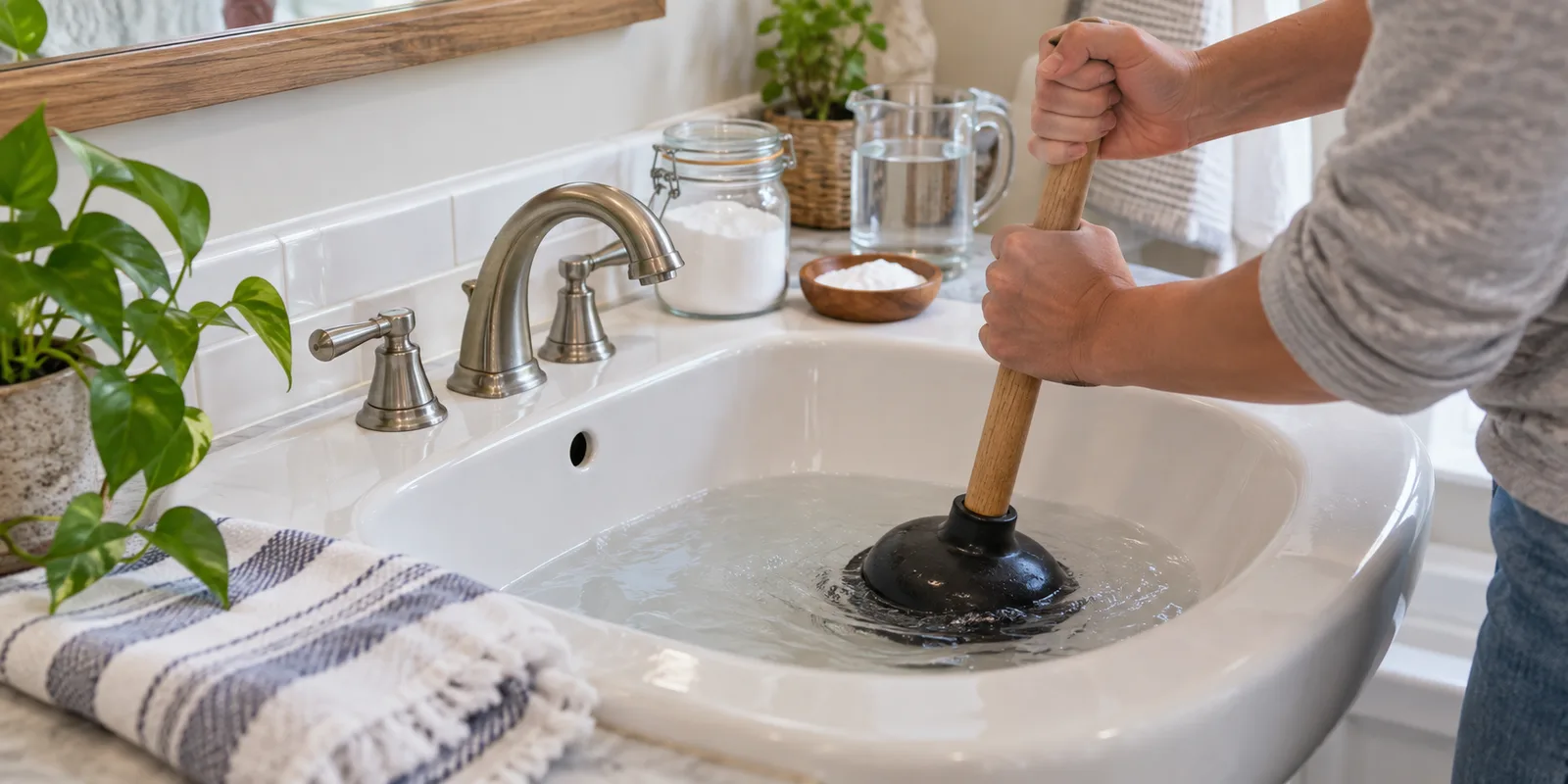
- Seal the overflow opening with a wet cloth. On a double sink, seal the other drain. Add enough water to cover the plunger cup, form a seal, and plunge with controlled strokes.
- Test drainage with tap water. If it remains slow, a removable slip-joint P-trap may hold the clog. Put a bucket beneath it and photograph the connections before loosening them. Skip this step for glued, corroded, inaccessible, or unfamiliar plumbing.
- Clean a serviceable trap, reinstall the washers in their original orientation, and tighten according to its fittings’ instructions. Do not force plastic nuts.
Check the result
Run water, watch it drain, and inspect every disturbed joint for drips. Recheck after a few minutes. If several fixtures back up, sewage appears, or the clog returns, stop and call a plumber; the blockage may be farther downstream.
Watch the demonstrated method
This Old House’s sink tutorial and video show stopper, plunger, and trap work. Match the method to your fittings. Keep hair out with a drain catcher.
Sources and scope
These references support the guidance above. Source review is not a hands-on test of your home or a certification of a product. Follow the instructions for your exact model and local requirements.
Related reads and checklists
Reviving a Dull Stainless Steel Sink
Restore a dull stainless-steel sink with approved cleaning, grain-wise wiping, and drying without abrasive kitchen hacks.
ChecklistWhole Home Plumbing Audit
Catch leaks before they become floods. A systematic check of taps, traps, and tanks to ensure water stays in the pipes.
ChecklistAppliance Deep Clean Checklist
Extend the life of your major appliances and improve safety with this deep cleaning routine.
BlogClean Your Range Hood Filter
Clean reusable hood filters with approved detergent methods, replace charcoal filters as directed, and check airflow afterward.