Garage Organization & Cleanout
Reclaim your parking space. A tactical plan to sort, store, and zone your garage for maximum utility.
By Dan Gold · Sources reviewed
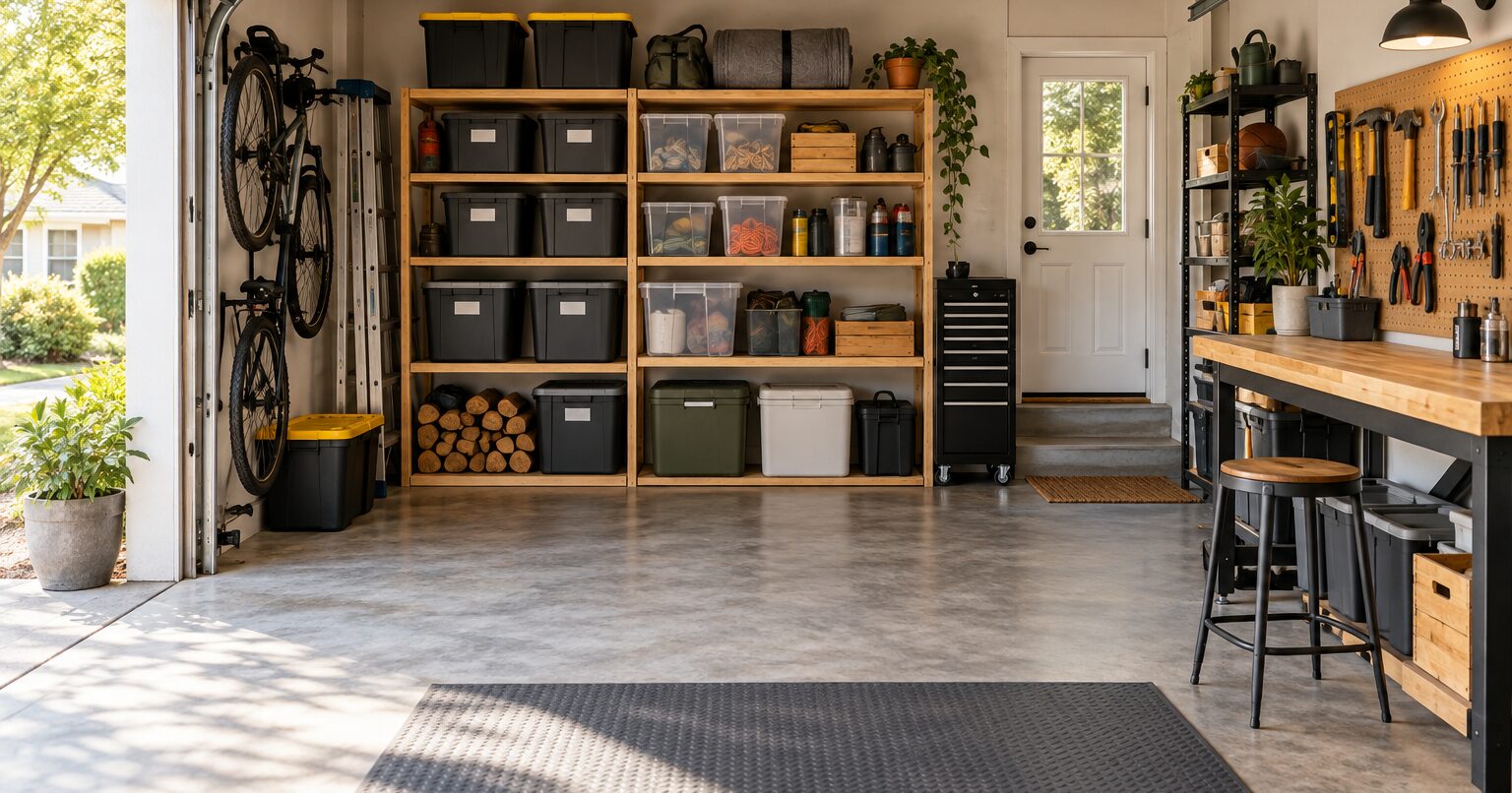
Start with a clear walking route and safe storage. Organizing a garage does not require moving heavy items alone, washing contaminated runoff into a drain, or servicing a garage-door spring.
Work through the checklist
- Choose a manageable zone. Check the weather and protect belongings from rain or theft. Use help or proper equipment for heavy items; keep exits and the door track clear.
- Sort with disposal rules in hand. Separate items to keep, donate, recycle, and take to hazardous-waste collection. Keep chemicals in labeled original containers; do not mix leftovers.
- Clean without spreading contamination. Sweep ordinary debris using appropriate dust protection. Handle oil or chemical spills according to their labels and local disposal rules; do not hose them into drains.
- Plan accessible zones. Put frequently used items within comfortable reach and heavy objects low. Keep children away from sharp tools, chemicals, and ignition hazards.
- Verify shelving and anchors. Use the rack manufacturer’s mounting method and load limits. Have structural mounting assessed if framing, ceiling capacity, or fasteners are uncertain.
- Check storage conditions. Follow each paint, fuel, battery, and charger label for temperature, ventilation, and ignition separation. Do not relocate hazardous products to an unsuitable indoor closet.
- Inspect the door visually. Stay clear of springs, cables, and moving hardware. Damaged or loose components require a trained door technician.
- Run the opener’s specified safety tests. Follow your model manual for photo-eye and contact reversal tests. If it fails, stop automatic operation and arrange service; do not compensate by increasing closing force.
Progress is saved in this browser. Revised tasks start a new checklist.
Check the result and follow up
The result should be a clear exit, stable labeled storage, and a door that passes its manufacturer’s tests. Finish disposal trips and recheck racks after loading.
Sources and scope
These references support the guidance above. Source review is not a hands-on test of your home or a certification of a product. Follow the instructions for your exact model and local requirements.
Did this help?
Get more simple guides like this in your inbox.
Related reads and checklists
Tool Box Essentials
The 20% of tools that do 80% of the work. Build a capable kit to handle basic home repairs.
BlogRemove Rust from Tools
Remove surface rust with a compatible treatment, protect handles and coatings, and retire tools whose damage affects safe use.
ChecklistFirst 7 Days Moving In
Chaos control for the first week in your new home. Prioritize what matters to get settled, safe, and clean fast.
BlogFind a Stud Without a Finder
Use a magnet to locate drywall fasteners, understand what it cannot prove, and verify framing before mounting.