Pool Opening Checklist
Plan a pool opening with equipment checks, water testing and chemical-label guidance, and know when to stop for qualified help.
By Dan Gold · Sources reviewed
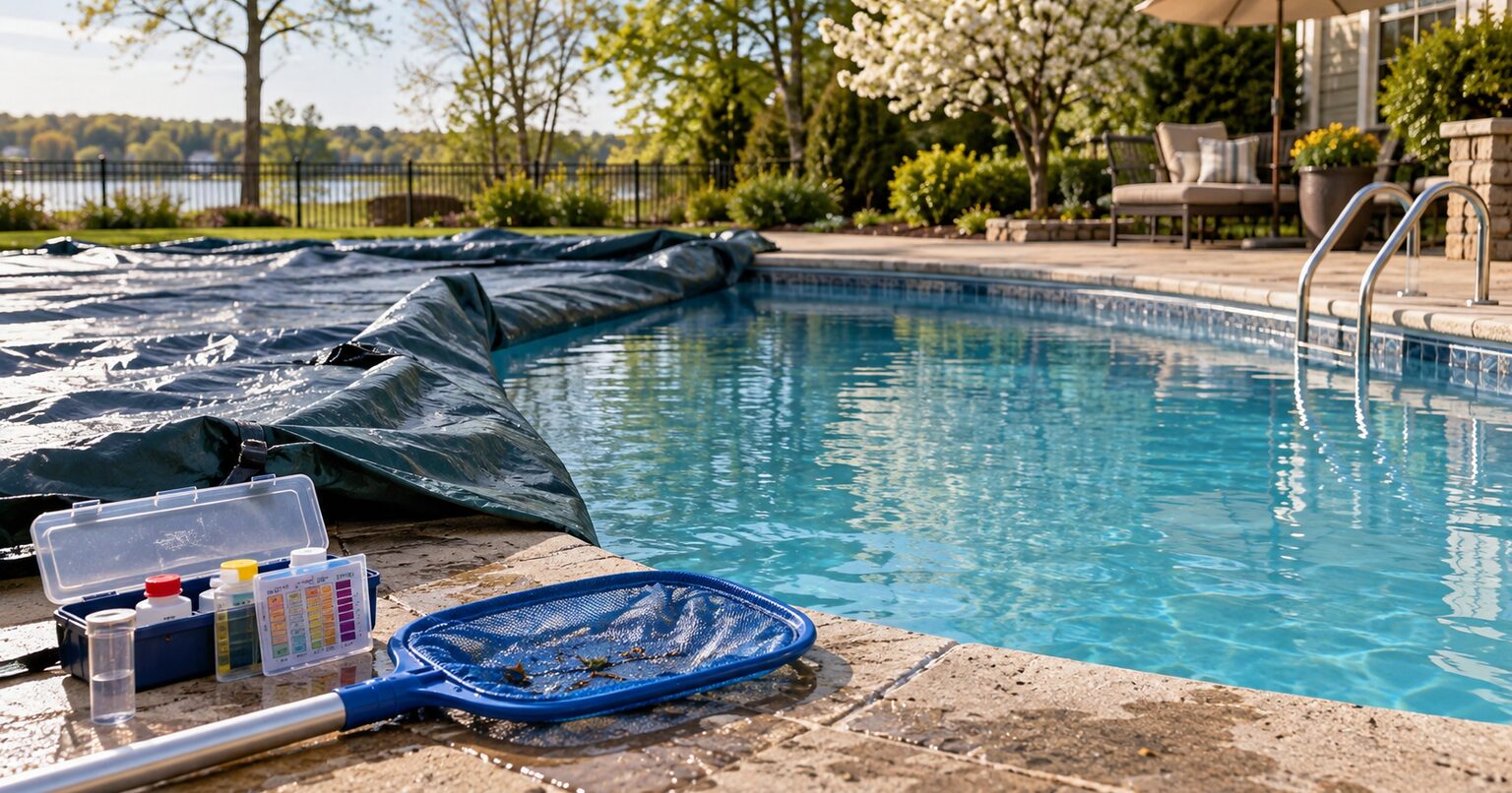
Use the manuals for your pool, pump, filter, heater and chemical system. Keep the pool closed to swimmers until barriers, equipment and tested water are ready. First-time opening or unfamiliar chemical dosing is a good reason to use a qualified pool service.
Work through the checklist
- Cover water: Remove standing water and debris using suitable equipment; keep children and pets away from the cover.
- Cover storage: Remove with help, clean as directed and dry fully before storing.
- Water level: Restore the operating level specified for the pool and skimmer.
- Plugs and valves: With power off, restore the exact winterized plugs and valve positions from your records/manuals.
- Fittings: Refit approved returns and skimmer baskets. Check drain covers for damage; do not swim with missing or unsafe suction covers.
- Seals: Use only manufacturer-approved lubricant on the indicated O-rings and surfaces.
- Priming: Prime the pump exactly as directed, secure the lid and clear people before startup. Never run dry or open a pressurized filter.
- Leaks and flow: Check for leaks, abnormal pressure and air. Shut down if the pump loses prime or pressure is abnormal.
- Debris: Brush and vacuum with the method suitable for the pool/filter. Verify local wastewater disposal rules before vacuuming to waste.
- Testing: Use in-date tests for free chlorine, pH and the additional chemistry required by your pool, including stabilizer where applicable.
- Balancing: Follow the chemical labels and pool material’s target ranges; calculate doses from actual water volume and test results.
- Sanitizing: Follow the approved startup treatment and retest. Never mix chemicals together or add water to concentrated chemicals.
- Extra products: Use algaecide, clarifier or flocculant only when indicated and compatible; they are not mandatory opening steps.
- Circulation: Run and clean the filter under its instructions until water clarity and chemistry meet safe-use criteria, not a universal runtime.
- Filter cleaning: Stop the pump and release pressure as directed before changing multiport settings or servicing the filter. Cartridges do not backwash.
- Access and barriers: Secure ladders/rails, verify gates and pool alarms, and assess any diving equipment against its installation requirements.
Progress is saved in this browser. Revised tasks start a new checklist.
Check the result and follow up
CDC recommends pH 7.0–7.8 and at least 1 ppm free chlorine in pools without cyanuric acid, or at least 2 ppm when it is used; product labels and pool instructions may set additional limits. Retest before swimming and confirm the bottom is visible, gates work and no equipment issue remains. Clear water alone does not establish sanitation. Never allow swimming while shock treatment is above its label’s safe re-entry level.
Sources and scope
These references support the guidance above. Source review is not a hands-on test of your home or a certification of a product. Follow the instructions for your exact model and local requirements.
Did this help?
Get more simple guides like this in your inbox.
Related reads and checklists
Check Outdoor Spigots (and Hoses)
Locate an outdoor-faucet leak, identify the model-specific repair, and winterize hoses without forcing a stuck valve.
ChecklistFall and Winterizing Checklist
Prepare your home for the cold. A complete guide to sealing leaks, servicing heating systems, and preventing freeze damage.
ChecklistSpring Opening Checklist
Wake up your home from winter hibernation. A complete guide to exterior inspections, system startups, and preparing your property for the warmer months.
BlogClean Gutters with a Leaf Blower
Assess whether ground-based gutter attachments suit your home, clear accessible debris safely, and check downspout flow.