Roof & Attic Inspection
The top-down checkup. Spotting leaks, ventilation issues, and insulation gaps to protect your home's envelope.
By Dan Gold · Sources reviewed
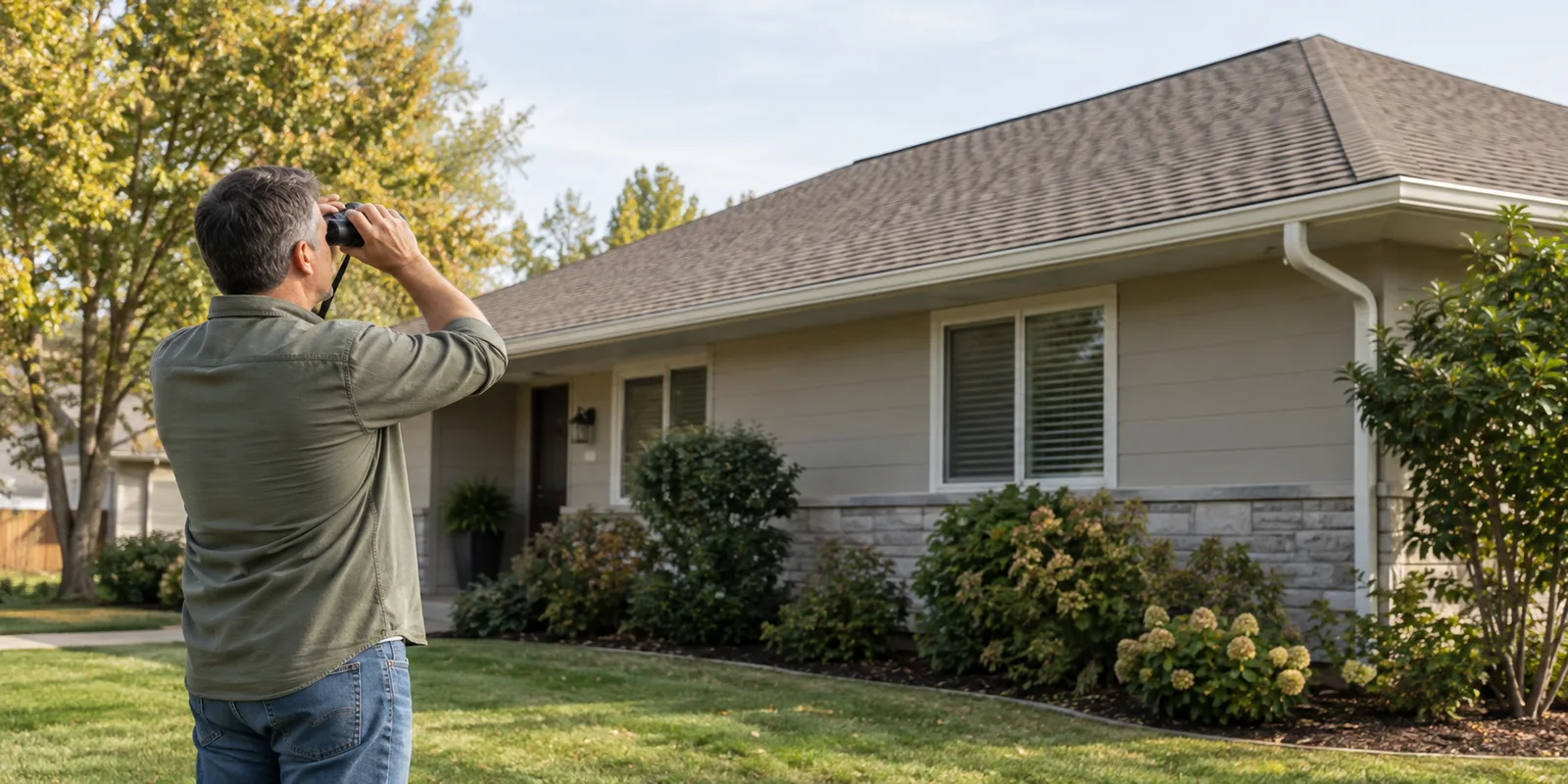
This is a homeowner observation checklist, not a roof certification. Inspect from the ground or a safe established access point. Do not climb a roof or enter an attic with unsafe access or suspected hazardous insulation.
Work through the checklist
- Look from the ground. Use binoculars if helpful to note missing or displaced roofing, sagging, damaged flashing, and obvious gutter problems. Photograph locations without climbing.
- Check accessible indoor signs. Note ceiling stains, active drips, musty odors, and when they occur. Color alone does not identify mold or prove its cause.
- Assess attic access before entering. Stop if there is unsafe footing, excessive heat, exposed hazards, pests, or suspect insulation. Ceiling drywall is not a walking surface.
- Leave suspect vermiculite undisturbed. EPA advises assuming it may contain asbestos. Do not sample, vacuum, move, or cover it yourself; seek a qualified assessment.
- Observe only from supported access. With adequate light, note visible water staining and damaged framing without disturbing wiring or insulation. Avoid unsafe tight spaces.
- Check ventilation paths. Look for blocked soffit openings and bathroom or dryer exhaust terminating in the attic. Have incorrect exhaust routes corrected outdoors under applicable requirements.
- Evaluate insulation by material and climate. Use the recommended R-value and an energy assessment; a fixed number of inches does not describe every insulation type.
- Schedule the right follow-up. Ask a roofer about damage and leaks, an energy professional about air sealing/insulation, and an appropriate specialist about suspected hazardous materials.
Progress is saved in this browser. Revised tasks start a new checklist.
Check the result and follow up
Keep dated photos and a list of unresolved findings. Recheck repaired areas after rain. A roof’s age or a few granules alone do not establish whether replacement is needed.
Sources and scope
- ENERGY STAR: attic ventilation
- ENERGY STAR: attic assessment
- EPA: leave vermiculite insulation undisturbed
These references support the guidance above. Source review is not a hands-on test of your home or a certification of a product. Follow the instructions for your exact model and local requirements.
Did this help?
Get more simple guides like this in your inbox.
Related reads and checklists
Clean Your Washing Machine Seal
Remove residue from a front-loader’s gasket with approved cleaning methods, avoid incompatible cleaners, and check for persistent odor or leaks.
BlogCheck Outdoor Spigots (and Hoses)
Locate an outdoor-faucet leak, identify the model-specific repair, and winterize hoses without forcing a stuck valve.
ChecklistFall and Winterizing Checklist
Prepare your home for the cold. A complete guide to sealing leaks, servicing heating systems, and preventing freeze damage.
ChecklistGarden & Lawn Startup
Kickstart your curb appeal. Timing is everything when waking up your lawn and preparing garden beds for spring.